Best Electric Wires in India for Home: Understanding Electrical Wire Markings and Specifications
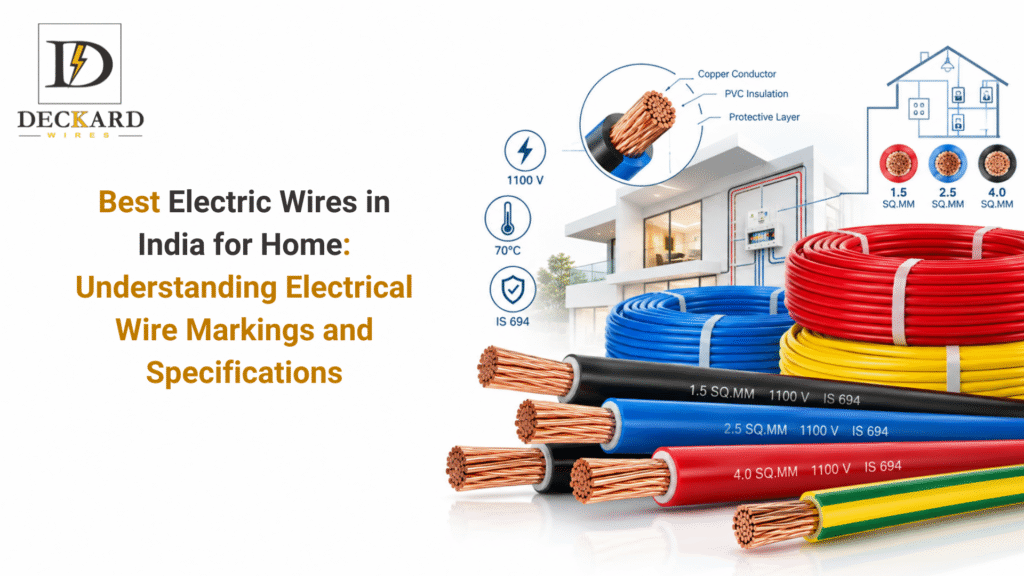
When selecting the electrical wires to be used in a new home or a complete renovation, it’s not just about comparing prices or picking a brand name that you are familiar with. The performance of a wiring system is influenced by the wire size, conductor material, insulation, voltage rating, and fire-safety characteristics. It is essential to know what the markings on the wire denote when it comes to the Best Electric Wires in India for Home.Terms such as SQ.MM, 1100V, FR, FRLS, and FRZH refer to different properties of the cable and are helpful for the buyer to ask the right questions before buying. What Do Electrical Wire Markings Mean? Electrical wire markings provide information about the construction and intended characteristics of a wire. Here are three terms customers commonly see. Understanding SQ.MM and 1100V in Electrical Wires The units of measurement used for the cross-sectional area of a conductor inside an electrical wire are square millimetres, or SQ.MM. Common sizes include 1.5 sq.mm, 2.5 sq.mm, 4 sq.mm, and larger. The size of the wire required is influenced by the electrical load, length of the circuit, type of wiring installation, voltage drop, and level of protection. The 1100V refers to the wire’s rating for electrical service at 1100 volts under the conditions for which it is rated. Current carrying capacity is not the same as voltage rating and is dependent on conductor size, insulation, installation conditions, temperature, and overall electrical design. What Does Copper Conductor Mean? The conducting portion of the wire is made of copper. The wide use of copper in electrical wiring is due to its electrical conductivity and flexibility in stranded construction. The quality and construction of the conductor are important as it makes up the bulk of the electrical connection. Users should not only rely on the exterior look of the wire, but also examine the conductor material, size, construction, and manufacturer’s specifications. Understanding Different Types of Electrical Wires Insulation technologies are created to have different levels of performance and safety requirements. FR Wires: FR stands for Flame Retardant. Deckard says its FR wires feature a single-core, multi-stranded copper conductor wire with FR PVC insulation to deliver flame resistance. FRLS Wires in India: FRLS stands for Flame Retardant Low Smoke. The wires have low-halogen content, reduced smoke characteristics, and flame-retardant properties. Deckard’s FRLS products are based on multiple stranded copper conductors and FRLS PVC insulating material. It is important for customers who are interested in FRLS wires in India to know that the term refers not only to a brand name but is also used to describe insulation properties. FRZH Wires: Flame Retardant Zero Halogen (FRZH) is a term used to denote Flame Retardant products that do not contain halogen. It has flame-retardant, low-smoke FRZH insulation, a halogen-free construction, and meets RoHS standards. FRLF Wires: FRLF stands for Flame Retardant Lead Free. Deckard’s FRLF wires feature multi-stranded copper conductors and are rated as RoHS compliant with FRLF PVC protection. HR FR-LSH Wires: HR FR-LSH is formulated with heat resistance, flame retardancy, and a low-smoke concept. This range is equipped with PVC heat-resistant, flame-retardant, low-smoke insulators, a 1100V rating, and flexible conductors, according to Deckard. Such a specification may be applicable if the installation features specific heat and fire-performance requirements. FRFS Wires: FRFS stands for Flame Retardant Fire Survival. Deckard describes its FRFS product as having a multi-stranded copper conductor, mica tape insulation, and a special flame-retardant compound. The company claims that the product will retain circuit integrity for 3 hours at 950°C in the event of a fire. These specialized cables are designed to be used in situations where it is important to keep the circuit intact in the event of a fire. How Electrical Wire Size Affects Home Wiring? One of the most crucial specifications to know when buying house wiring cables is the wire size. A smaller conductor and a larger conductor are not the same. However, consumers should not base their size selections simply on assumptions about what size their appliances are going to require. The appropriate size should be calculated based on the actual electrical load and installation design. Factors include: Expected current load Circuit length Permitted voltage drop Installation method Ambient temperature Cable grouping Protective-device rating Applicable electrical standards Thus, it is advised that 1.5 sq mm wire, 2.5 sq mm wire, or 4 sq mm wire should be chosen based on the design of the circuit and not just by selecting the biggest one. Best Home Electrical Wires in India: What Should Buyers Check? Before buying electrical wires, use this simple checklist: What to Check Why It Matters Conductor material Determines the current-carrying core SQ.MM size Indicates conductor cross-sectional area Voltage rating Shows the specified operating voltage capability Insulation type Provides protection around the conductor Fire characteristics Helps identify FR, FRLS, and specialised options Compliance Provides information about applicable requirements Manufacturer testing Indicates how products are evaluated Product documentation Helps verify specifications before purchase This approach is more useful than choosing a wire solely because it is inexpensive or heavily advertised. Why FRLS Wires Can Be Considered for Safer Electrical Installations Fire performance is an important consideration when selecting safe electrical wires for home and other buildings. FRLS insulation is designed to provide flame-retardant and low-smoke characteristics. Deckard describes its FRLS cables as designed to limit flame spread and reduce smoke and halogen-related emissions during fire conditions. However, choosing FRLS does not replace proper electrical design, correct protection, professional installation, or compliance with applicable requirements. Common Mistakes to Avoid When Buying Electrical Wires Avoid these common purchasing mistakes: Choosing a wire only because it is cheaper. Selecting wire size without calculating the electrical load. Assuming a higher voltage rating automatically means better performance. Ignoring insulation type and installation conditions. Buying without checking technical specifications. Comparing brands without comparing equivalent products. Assuming every FR or FRLS product has identical construction. Installing wires without appropriate professional electrical guidance. Why Choose Deckard Wires for Electrical Wiring Solutions? Deckard Wires .offers PVC-insulated residential