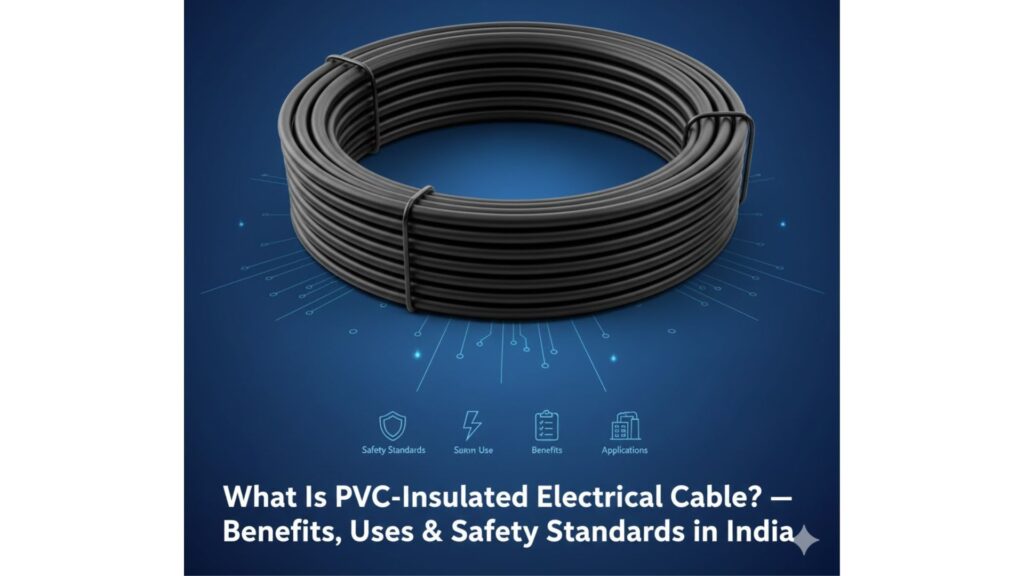
What Is a PVC-Insulated Electrical Cable?
A PVC-insulated electrical cable includes a conductor (copper or aluminium) surrounded by a protective outer insulation made of polyvinyl chloride (PVC). The PVC layer prevents electrical contact, reduces the risk of short circuits, and protects the conductor against moisture, chemicals and mechanical damage.
Why Is PVC Used in Electrical Cables?
Properties that make PVC suitable
- Fire resistance: Many PVC wires in India are flame retardant (FR) or FR-LSH, slowing flame spread and reducing harmful smoke.
- Moisture & heat resistance: Performs well in humid and hot conditions commonly seen across India.
- Flexible: Easy to bend and install in tight spaces.
- Economical: Low cost while offering long life span.
Key Benefits of PVC-Insulated Electrical Cables
- Maximum safety: Insulation prevents shocks, shorting and overheating.
- Long life span: Good quality PVC wires last many years when installed correctly.
- Weather & chemical resistance: Suitable for varied Indian climates and household chemicals.
- Universal use: Suitable for domestic, commercial and industrial wiring.
- Budget-friendly: Cost-effective compared to some specialty insulations.
Common Uses of PVC Wire in India
PVC wires are widely used across these categories:
- Home wiring: Lighting circuits, power points, fans and general purpose wiring.
- Commercial buildings: Offices, shops and malls for lighting and power distribution.
- Industrial: Motors, control panels and equipment wiring (choose correct gauge and FR types).
- Appliances: Internal wiring for mixers, coolers, washing machines and more.
- Automotive & control wiring: Flexible PVC cables are used in control panels and vehicle applications.
Safety Standards for PVC Cables in India
Always buy wires that follow Indian regulatory and industry standards. Key checks include:
Bureau of Indian Standards (BIS / ISI)
Look for the ISI mark and relevant standards:
- IS 694 — PVC insulated wires for general wiring in buildings.
- IS 1554 — Heavy-duty PVC insulated power cables (for industrial use).
Flame-Retardant (FR / FR-LSH)
FR or low-smoke zero-halogen (LSZH/LSHF) variants minimise fire spread and smoke toxicity in enclosed spaces.
Conductor Quality & Construction
Prefer pure copper conductors (oxygen-free copper — OFC) for better conductivity and lower losses. Multi-strand conductors are more flexible and durable than solid wires for many applications.
Other Practical Checks
- Uniform and thick insulation (no thin spots).
- Clear marking on the sheath (size, ISI/BIS mark, brand, voltage rating).
- Right wire gauge for the load (e.g., 1.0 mm², 1.5 mm², 2.5 mm² etc.).
- Reputable brand reputation & warranty.
How to Choose the Right PVC Cable
Follow these steps while selecting wires for a project:
- Identify the load and select correct gauge (ampacity).
- Choose FR or FR-LSH where fire safety is critical.
- Prefer ISI-marked, BIS-certified products.
- Check conductor type — go for pure copper when possible.
- Buy from authorised dealers and retain invoices for warranty/support.
Conclusion — Why Deckard Wire Is a Great Choice
Deckard Wires manufactures PVC-insulated electrical cables with high-grade PVC, flame-retardant options, and pure copper conductors while following BIS/ISI standards. Whether you are wiring a home, office or an industrial site, choosing certified Deckard cables reduces risks and gives long-term reliability.