
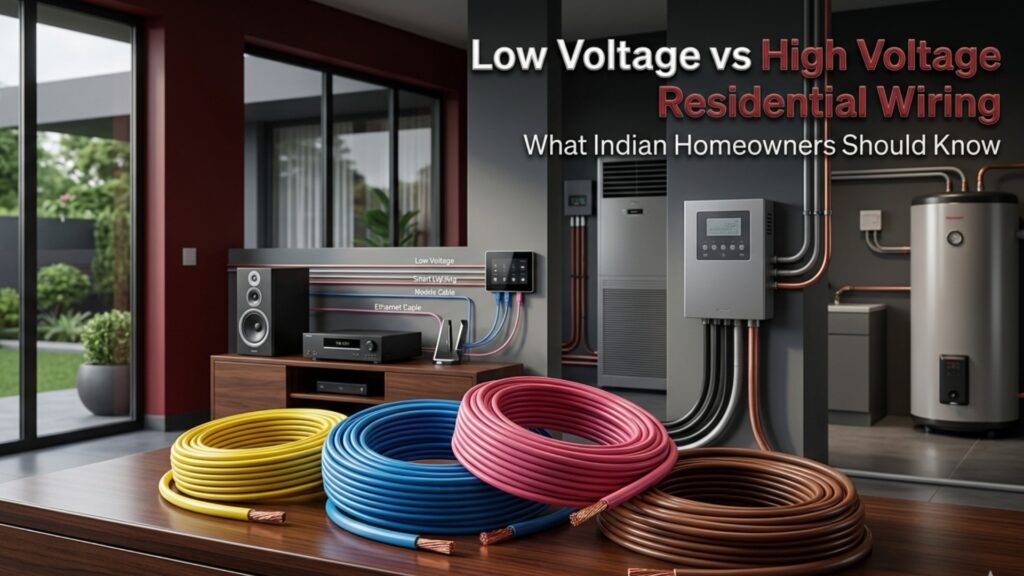
When it comes to residential wiring, there are indeed differences between low voltage and high voltage. The fact that there is a difference between the low-voltage and high-voltage wiring in a home is not uncommon in India.
The homes that people have now are smarter, safer, and more energy-efficient than ever. From smart lighting to advanced security systems to heavy-duty household appliances, every house needs a reliable and robust electrical system. This is the primary reason why few people have become very conscious about knowing the wiring of a house in India for the homeowners, builders, and electricians. Whether it’s installing new wiring systems in residential buildings or upgrading existing ones, selecting the appropriate residential wiring in India can help improve safety, efficiency, and performance. An appropriate knowledge of low-voltage and high-voltage systems helps the homeowners to choose the right residential electrical wiring solutions offered in India. This blog will provide you with an overview of the different types of wires, their uses, benefits, and which one is best suited for a residential wiring job in India.
Understanding Voltage in Home Wiring
The voltage used to power electric devices and appliances. It simply indicates the amount of electrical energy that can be conducted by the wiring. House wiring in India is done primarily in two voltage systems, namely:
- Low-Voltage Wiring
- High-Voltage Wiring
There is a difference between both systems in residential electrical systems.Low voltage systems are used mostly in communications, automation and security devices, while high voltage systems are used to transmit power to large electrical equipment.It is essential to comprehend these systems when designing effective electrical wiring in the home in India.
What is low-voltage residential wiring?
Low voltage wiring works at a lesser electrical power level and is primarily employed for systems that are not heavy electrical power loads.Low-voltage wiring applications are common in many places.
- CCTV cameras
- WIFI and internet cables
- Doorbells
- Video intercom systems
- Smart home automation
- Audio and entertainment equipment
With the advent of smart homes and security systems, the demand for low-voltage residential wiring in India is growing.
Benefits of Low-Voltage Wiring
Improved Safety
Low-voltage systems minimize electrical shock and fire hazards.
Energy Efficiency
They use less electricity than the conventional systems.
Smart Home Compatibility
Low-voltage wiring provides power for smart home devices and technology.
Easy Maintenance
These systems are more easily maintained and upgraded.
Low-voltage systems are the perfect solution for homeowners seeking future-proof electrical solutions in their homes in India.
What is high voltage residential wiring?
High-voltage wiring prevents the electric system from going into overload when heavy appliances are used. Using the best cable for homes in India is crucial for safety and efficiency, and it is essential that it be installed properly.
Safety Considerations
Often faulty wires or installation can lead to the following:
- Short circuits
- Electrical fires
- Voltage fluctuations
- Appliance damage
For this reason, homeowners need to always opt for reliable and certified home wiring in India solutions.
How does high-voltage residential wiring work?
High-voltage electrical wiring is used for the electrical power supply to appliances and systems that need greater electrical power.
The following is a list of common uses of low-voltage wiring.
- Air conditioners
- Refrigerators
- Geysers
- Washing machines
- Microwave ovens
- Water pumps
The house wiring system in India is primarily constructed around the high-voltage system, which is for power transfer all over the house.
Low Voltage vs High Voltage Wiring: Key Differences
Power Capacity
Low-voltage wiring is used on low-current appliances, and high-voltage wiring is used on heavy appliances.
Installation Process
Installing low-voltage electrical systems is easier than installing high-voltage electrical systems.
Safety
The low-voltage wiring is usually safer, but both systems need to be properly insulated and installed.
Cost
Generally, the thicker and stronger the wires, the higher the cost of a high-voltage system.
Maintenance
Low-voltage wiring systems are easier to maintain than high-voltage wiring systems.
Common Errors in Residential Wiring
Homeowners often overlook key electrical safety precautions that can result in big problems.
Overloading Circuits
Excessive wiring loads can bring harm to the wiring system.
Poor-Quality Wires
Low-quality wires can overheat and lead to electrical fires.
Improper Earthing
If the earthing is not done, then there is an increased risk of electric shocks.
Incorrect Voltage Planning
The impact of using improper voltage systems is on the performance and safety of the appliances.
How to Choose the Right Cable for Home in India?
Correct Wire Size
Wire sizes vary from appliance to appliance depending on the load capacity.
ISI Certification
Use only ISI-marked wires for safety and to meet Indian standards.
Fire Resistance
For extra safety, use fire-resistant and heat-resistant cables.
The proper cables will ensure the reliability of house wiring in India and cut down on maintenance costs.
Conclusion
To sum it up, low voltage vs. high voltage residential wiring is a crucial concept to comprehend for a safe, efficient, and future-proof home. On one hand, low-voltage wiring is used for smart devices, security and communication networks, and, on the other, high-voltage wiring is used for heavy appliances in the house and power distribution. The selection of the appropriate house wiring in India, along with certified and fire-resistant cables, enhances safety, energy efficiency, and long-term performance. Deckard Wire offers professional and durable residential wiring services that cater to today’s electrical requirements, ensuring the safety and longevity of residential and commercial buildings in India.